Apr
18
How to Rank Your Business on Google Maps in 2026 — The Complete Local SEO Guide
Why Google Maps Rankings Matter More Than Ever
When someone searches for a plumber, dentist, restaurant, or any local service, the first thing they see on Google is not a list of websites. It is the Google Maps local pack — the block of three businesses that appears at the top of the search results with a map, star ratings, and a click-to-call button. According to BrightLocal's Local Consumer Review Survey, 98 percent of consumers used the internet to find information about local businesses in the past year, and the local pack captures the majority of those clicks. If your business is not in that local pack, you are invisible to a huge portion of your potential customers.
The good news is that ranking on Google Maps is not reserved for the biggest businesses with the largest marketing budgets. With the right strategy applied consistently, a local business of any size can compete for those top spots. This guide walks you through every factor that influences your Google Maps ranking and exactly what you need to do to improve it.
How Google Decides Who Ranks on Google Maps
Google uses three core factors to determine local pack rankings. Google's own documentation on how local results are ranked confirms these three signals as the official framework behind every local search decision.
- Relevance: How closely your Google Business Profile and website match what the searcher is looking for. If someone searches "emergency plumber Dallas" and your profile is set up as a general contractor, you are unlikely to appear. Google needs to clearly understand what you do and where you do it.
- Distance: How far your business location is from the searcher or from the location specified in the query. While you cannot move your business, there are strategies that extend your visibility across a wider geographic area.
- Prominence: How well known and trusted your business is, both online and offline. This is influenced by your reviews, backlinks, citations, website authority, and how much information Google has about your business.
Every tactic in this guide targets one or more of these three factors. According to Moz's Local Search Ranking Factors study, Google Business Profile signals are consistently among the top ranking factors in local search, followed closely by review signals and on-page SEO. The businesses that rank consistently are the ones that have optimized across all three.
Step 1 — Claim and Fully Complete Your Google Business Profile
Your Google Business Profile (formerly Google My Business) is the single most important factor in your Google Maps ranking. If you have not claimed it yet, that is the very first thing you need to do. Go to business.google.com, search for your business, and claim it. Once claimed, complete every single field available.
Critical fields that directly impact your ranking include:
- Business name: Use your real business name exactly as it appears in the real world. Do not add keywords to your business name as this violates Google's Business Profile guidelines and can get your listing suspended.
- Primary category: This is the most important field in your entire profile. Choose the category that most specifically describes your primary service. If you are a personal injury lawyer, choose "Personal Injury Attorney" not just "Lawyer."
- Secondary categories: Add every relevant secondary category that applies to your business. Each one expands the range of searches you can appear for.
- Business description: Write a natural, keyword-rich description of what your business does, who you serve, and where you are located. Include your main service keywords and your city or region.
- Services and products: Add every service you offer with descriptions. Google reads this content and uses it to match your profile to relevant searches.
- Business hours: Keep these accurate and up to date. Profiles with incorrect hours get flagged by users and penalized by Google.
- Phone number and website URL: Make sure these match exactly what appears on your website and across all your other online listings.
- Photos: According to Google's own guidance on photos, businesses with photos receive 42 percent more requests for directions and 35 percent more website clicks than those without. Add interior photos, exterior photos, team photos, and photos of your work or products.
Step 2 — Get More Google Reviews (and Respond to All of Them)
Reviews are one of the most powerful ranking signals in local SEO. Google looks at the quantity of reviews, the average star rating, the recency of reviews, and the keywords that appear within review text. BrightLocal's research found that 87 percent of consumers read online reviews for local businesses, and that the average consumer reads at least ten reviews before feeling they can trust a business. A business with 150 reviews will almost always outrank a competitor with 15, all else being equal.
The most effective ways to generate more Google reviews include:
- Ask every satisfied customer directly, either in person, via email, or via SMS immediately after completing a job or sale
- Create a short review link using Google's review link tool and add it to your email signature, your website, and your follow-up messages
- Add a "Leave Us a Review" button or link to your website's contact page and footer
- Include a review request in your post-purchase or post-service follow-up sequence
- Train your staff to mention reviews as part of their customer interaction
Just as important as getting reviews is responding to them. Google has confirmed that responding to reviews signals that your business values its customers, and this activity positively influences local search ranking. When responding to negative reviews, always be professional, acknowledge the concern, and offer to resolve the issue offline. Keyword-rich responses can also help reinforce your relevance for specific search terms.
Step 3 — Build Consistent NAP Citations Across the Web
NAP stands for Name, Address, and Phone number. Citations are any online mention of your business information, whether on a directory, a review site, a social media profile, or a local news article. Google cross-references these mentions to verify that your business is legitimate and that its details are consistent. Search Engine Land has extensively documented how inconsistent NAP data confuses Google's local algorithm and dilutes ranking signals.
Inconsistencies in your NAP data — even something as minor as "St." versus "Street" in your address — can create confusion for Google and dilute your local ranking signals. Consistency is key.
High-priority citation sources to build or clean up include:
- Yelp
- Bing Places for Business
- Apple Maps
- Facebook Business Page
- Better Business Bureau
- Foursquare
- Yellow Pages and YP.com
- Industry-specific directories relevant to your niche (Houzz for contractors, Healthgrades for medical, Avvo for legal, and so on)
- Your local Chamber of Commerce website
- Local newspaper and community websites
Start by auditing your existing citations to find and fix inconsistencies. Moz's guide to local SEO recommends starting with the major data aggregators — Neustar Localeze, Acxiom, Foursquare, and Data Axle — as these feed information to hundreds of downstream directories automatically.
Step 4 — Optimize Your Website for Local SEO
Your Google Business Profile does not operate in isolation. Google also looks at your website when determining how to rank your listing. A well-optimized local website sends strong relevance and authority signals that support your Maps ranking. Google's SEO Starter Guide makes clear that on-site signals play a significant role in how well your business performs across all search surfaces including Maps.
Key website optimizations for local SEO include:
- Local landing pages: Create dedicated pages for each service and each location you serve. A roofing company serving three cities should have a separate optimized page for each city rather than one generic page.
- NAP in the footer: Include your business name, address, and phone number in the footer of every page on your site. This reinforces your location data sitewide.
- Locally optimized title tags and meta descriptions: Include your primary keyword and city in the title tag of your homepage and service pages. For example: "Emergency Plumber in Austin TX | Available 24/7 | Your Business Name."
- Embedded Google Map: Embed a Google Map showing your business location on your contact page. This is a simple but effective local SEO signal.
- Local schema markup: Add LocalBusiness schema to your website to give Google structured data about your business type, address, phone number, hours, and service area. Google's structured data documentation for local businesses explains exactly which schema properties are supported and how to implement them correctly.
- Location-specific content: Blog posts, case studies, and testimonials that reference your city, neighborhood, or service area help establish local relevance.
Step 5 — Build Local Backlinks to Boost Your Authority
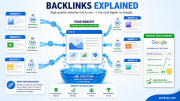
Backlinks from other websites pointing to yours are one of the strongest signals of authority in Google's algorithm, and this applies to local SEO just as much as it does to organic rankings. Ahrefs' research on local SEO shows that link authority from locally relevant sources carries additional weight compared to generic backlinks, making a handful of quality local links more valuable than dozens of irrelevant ones.
The best sources of local backlinks include:
- Local news websites and community blogs covering your area
- Sponsorships of local events, sports teams, or charities that list sponsors on their websites
- Local Chamber of Commerce member listings
- Partnerships with complementary local businesses that link to each other
- Guest posts on local industry blogs or regional publications
- Press releases about genuinely newsworthy business updates submitted to local media
Step 6 — Post Regularly to Your Google Business Profile
Most business owners set up their Google Business Profile once and never touch it again. The businesses that rank at the top of Google Maps are almost always the ones that treat their profile like an active social media channel. Search Engine Land's analysis of local ranking factors identified regular profile activity as a meaningful signal of business legitimacy and engagement that Google rewards in local rankings.
Google Business Profile posts appear directly in your listing in search results and Maps. Regular posting signals to Google that your business is active, which positively influences your ranking. Post at least once or twice a week with content such as:
- Current promotions and offers
- New products or services
- Business news and updates
- Before and after photos of completed work
- Customer spotlights or case studies
- Seasonal content relevant to your industry
- Answers to frequently asked questions
Include relevant keywords naturally in your post text, and always add a photo and a call-to-action button to maximise engagement.
Step 7 — Answer Every Question in the Q&A Section
The Q&A section of your Google Business Profile is often completely ignored by business owners, yet it presents a significant ranking and conversion opportunity. Anyone can ask a question on your listing, and anyone can answer — including you. Semrush's Google Business Profile optimization guide recommends proactively seeding your own Q&A section with the most common questions your customers ask and answering them with keyword-rich, informative responses.
This not only helps potential customers make faster decisions but also adds relevant text content to your profile that Google can use to match you to more searches. It also prevents competitors or unhappy customers from being the first to answer questions on your listing.
Step 8 — Monitor and Improve Your Core Web Vitals and Mobile Experience
Google uses your website's user experience as part of its local ranking assessment. Google's Core Web Vitals documentation confirms that page experience signals including loading speed, interactivity, and visual stability are used as ranking inputs across all search surfaces. Since the majority of local searches happen on smartphones, your mobile experience is particularly critical.
Key technical factors to address include:
- Page load time — aim for under three seconds on mobile. Google's mobile speed research found that 53 percent of mobile site visitors leave a page that takes longer than three seconds to load
- Core Web Vitals scores — check these in Google Search Console under the "Experience" section
- Mobile responsiveness — your site must display correctly on all screen sizes
- Secure HTTPS connection — an insecure site damages both trust and rankings
- Intrusive pop-ups on mobile — these are penalized by Google as confirmed in their mobile interstitials guidance
How Long Does It Take to Rank on Google Maps?
This is the question every local business owner asks. The honest answer depends on your market, your competition, and how thoroughly you implement the strategies above. BrightLocal's research on local SEO timelines found that most businesses begin to see meaningful improvements in their local rankings within three to six months of implementing a consistent strategy, with less competitive markets seeing results in as little as four to eight weeks.
The businesses that rank at the top of Google Maps in any market are not there by accident. They have a profile that is fully optimized, a steady flow of recent reviews, consistent citations, a well-optimized website, and they are actively maintaining their presence. The ones that fall behind are the ones that set it up once and walk away.
Need Help Ranking Your Business on Google Maps?
If you want to skip the learning curve and get your local SEO done right the first time, our professional SEO services are available now. From technical SEO audits to on-page optimization and full local SEO implementation, every service is delivered by an expert with nearly 20 years of hands-on experience and a 4.9 star rating across hundreds of verified client reviews.
Get professional local SEO help on Fiverr and start moving your business up the Google Maps rankings today.
RELATED POSTS:


leave a comment
Please post your comments here.-
Partners