Apr
27
What Are Backlinks And How Do You Get Them?
The Short Answer First
A backlink is a link from someone else's website pointing to yours. That is it. When another site links to one of your pages, you have earned a backlink from them.
Simple concept. But the reason backlinks matter so much to SEO is a bit more interesting than that, and understanding why they matter is what will help you build them the right way.
Why Google Cares About Backlinks
When Google was first built, its founders came up with a clever idea. Instead of just looking at what was written on a webpage to decide how good it was, they would also look at what other websites thought of it. If lots of other sites were linking to a page, that was a signal that people found it valuable. The more links a page had from respected sources, the more trustworthy it appeared.
That idea became PageRank, and it is still one of the most important signals in Google's algorithm today. Over 25 years later, backlinks remain one of the top three ranking factors in Google search. Sites with strong backlink profiles consistently outrank sites with weak ones, even when the content quality is similar.
Think of each backlink as a vote of confidence from another website. One vote from a respected national publication carries a lot more weight than ten votes from directories nobody has heard of. Quality matters far more than quantity.
Not All Backlinks Are Equal
Before getting into how to build backlinks, it is worth understanding what separates a good backlink from a bad one. Building the wrong kind can actually hurt your rankings rather than help them.
High-value backlinks come from:
- Websites with strong domain authority and real organic traffic
- Sites that are topically relevant to your niche or industry
- Pages where your link appears naturally within actual content
- Sites that do not link out to hundreds of other sites on the same page
- Links that use descriptive anchor text related to your topic
Low-value or harmful backlinks come from:
- Spammy directories that exist only to sell links
- Link farms where every page is just a list of outgoing links
- Sites with no real content or traffic
- Paid links that violate Google's guidelines
- Irrelevant sites with no connection to your topic
You can check the current state of your backlink profile at any time using the Backlink Checker. It shows you which sites are linking to your domain, the quality of those links, and where your profile stands overall. Running this check before you start building new links gives you a clear picture of your baseline.
Domain Authority and Why It Matters for Backlinks
Domain authority is a score that predicts how likely a website is to rank in search results. It runs from 0 to 100 and is based largely on the quality and quantity of backlinks pointing to that domain. A site with a domain authority of 70 has built up significant trust with search engines over time. A brand new site starts at around 1.
When a high authority site links to yours, some of that authority passes to your page. This is sometimes called link equity or link juice. It is not an exact science but the principle is consistent: links from strong sites help you rank better than links from weak sites.
Check your current domain authority with the Domain Authority Checker and your MozRank with the MozRank Checker. These scores give you a useful benchmark for tracking your progress as your backlink profile grows. Run them now and save the numbers so you have something to compare against in three to six months.
Follow vs Nofollow Links
There are two main types of backlinks and they work differently.
A follow link passes authority from the linking site to yours. This is the standard type of link and the one that directly helps your rankings.
A nofollow link includes a tag that tells Google not to pass authority through it. Nofollow links were introduced to stop spam, and many large platforms like Wikipedia, Reddit, and most social media sites use them by default.
For a long time, nofollow links were considered worthless for SEO. The current thinking is more nuanced. Google has said it uses nofollow as a hint rather than a hard rule, meaning it may still factor in nofollow links to some degree. More importantly, nofollow links from major publications still drive real referral traffic and help build brand awareness even without directly passing link equity.
A healthy backlink profile has a mix of both. If every single backlink pointing to your site is a follow link, that can actually look unnatural to Google. Real link profiles have a natural spread.
How to Get Backlinks: The Methods That Actually Work
There is no shortage of advice on building backlinks online, most of it either outdated, impractical, or describing tactics that will get your site penalized. Here are the methods that genuinely work in 2026.
Create Content Worth Linking To
This sounds obvious but it is the foundation everything else builds on. If your content is thin, generic, or identical to what already exists, nobody has a reason to link to it. The sites that attract the most natural backlinks publish things that are genuinely useful, detailed, and hard to find elsewhere.
Original research and data are among the most linked-to content types on the web. If you can survey your audience, compile industry statistics, or publish findings that nobody else has, other sites will cite and link to you as the source. Even a small survey of 50 people in your niche can generate links if the data is interesting.
Comprehensive guides that cover a topic better than anything else ranking for that term also attract links naturally over time. The goal is to create the resource you would want to bookmark and send to someone who asked you about that topic.
Guest Posting
Guest posting means writing an article for someone else's website in exchange for a link back to yours. Done properly, it is one of the most reliable backlink building methods available.
The key is targeting the right sites. Look for blogs and publications in your niche that have real audiences, publish quality content, and actually get organic search traffic. A guest post on a site with a domain authority of 40 and genuine readership is worth far more than ten posts on low-quality sites nobody visits.
When you pitch a guest post, propose a specific topic that fits their audience and that you can genuinely write well. Generic pitches get ignored. Editors respond to specific, well-researched ideas that show you have actually read their publication.
Keep the link in your author bio or naturally within the content where it genuinely adds value for the reader. Forcing keyword-rich anchor text links into unrelated sentences is a red flag for both editors and Google.
The Skyscraper Technique
The skyscraper technique works like this. Find a piece of content in your niche that has attracted a lot of backlinks. Create a significantly better version of it. Then reach out to the sites linking to the original and let them know about your improved version.
It works because you are not asking people to link to something random. You are offering them an upgrade on a resource they have already decided is worth linking to. The conversion rate on outreach like this is much higher than cold link requests.
To find link-worthy content in your niche, look at what competitors are ranking for and check which of their pages have the most backlinks. Then build something genuinely more thorough, more current, and more useful.
Broken Link Building
Broken link building involves finding links on other websites that point to pages that no longer exist, then offering your content as a replacement.
When a website links to a page that returns a 404 error, that is a problem for the site owner. Their readers click the link and get an error page. If you can find these broken links and reach out to say "hey, that link is broken, here is a relevant resource you could replace it with", site owners are often genuinely grateful and happy to update the link.
Use the Broken Links Finder to scan pages in your niche for broken outbound links. When you find one pointing to a topic you have content about, reach out with a polite, brief message explaining the broken link and suggesting your page as a replacement. Keep it helpful rather than salesy.
Local Citations and Directory Listings
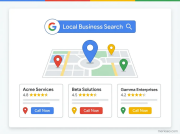
If you run a local business, building citations is one of the most direct backlink building activities available. A citation is any mention of your business name, address, and phone number online, and many of them include a link back to your website.
Getting listed on Google Business Profile, Yelp, the Better Business Bureau, your local Chamber of Commerce, and industry-specific directories all build your local backlink profile and reinforce your NAP consistency, which Google uses to verify your business is legitimate.
The key with citations is consistency. Your business name, address, and phone number must be identical across every listing. Even small differences like "Street" versus "St" can dilute the signals.
Get Featured in Roundups and Resource Pages
Many websites in every niche publish weekly or monthly roundups of the best content they have found. Others maintain resource pages linking out to useful tools and guides. Both are worth targeting for backlinks.
For roundups, publish timely, high-quality content and reach out to curators in your niche when you publish something particularly strong. A simple message saying "I published this guide this week and thought it might be relevant for your next roundup" is all it takes, and it works more often than you might expect.
For resource pages, search Google for phrases like "best SEO resources" or "useful marketing tools" in your niche. Look for pages that are clearly curated lists of external links. If your tool or guide fits naturally, reach out and suggest it. Many resource pages get updated regularly and the owners are often open to adding quality additions.
Digital PR and Newsjacking
Digital PR means getting your business or content mentioned in online publications, blogs, and news sites. A single feature in a high-authority publication can deliver more link equity than months of manual outreach.
Newsjacking is a tactic where you publish content that ties into a breaking news story or trending topic in your industry. When journalists are writing about that topic and searching for sources, they find your content and link to it. The window is short but the links can be high quality.
You can also sign up for services like HARO (Help a Reporter Out) where journalists post requests for expert sources. If you can provide a useful quote or insight on a topic in your niche, you often earn a mention and a backlink in the resulting article.
What to Avoid: Tactics That Will Get You Penalized
As much as it is worth knowing what works, it is equally important to know what to avoid. Google has become very good at identifying manipulative link building and the penalties are serious.
Stay away from:
- Buying links. Paid links that are intended to pass PageRank violate Google's guidelines. Getting caught can result in a manual penalty that tanks your rankings overnight.
- Private blog networks (PBNs). These are networks of fake sites created specifically to link to each other. Google has been targeting and deindexing PBNs aggressively for years.
- Link exchanges. Swapping links with another site purely for SEO purposes, with no genuine editorial reason, is considered a link scheme by Google.
- Automated link building tools. Tools that blast your URL to hundreds of directories, forums, or comment sections generate low-quality links that can actively harm your domain.
- Exact match anchor text overuse. If every backlink pointing to your site uses the same keyword-rich anchor text, it looks manipulative. Natural link profiles have varied anchor text.
If you are unsure whether your existing backlink profile contains any toxic links, run your domain through the Backlink Checker and look for patterns that seem unnatural. Lots of links from the same IP range, links from sites in completely unrelated languages, or links from pages with hundreds of outgoing links are all warning signs worth investigating.
How Long Does Link Building Take to Work?
Backlink building is one of the slower parts of SEO. A link earned today might not be crawled and indexed by Google for days or weeks. And the ranking improvement from a single link often takes weeks or months to show up in your positions.
That said, the effects are cumulative and long-lasting. A strong backlink profile built over 12 months creates a foundation that continues to support your rankings for years. Unlike paid ads that stop working the moment you stop spending, backlinks keep working as long as they exist.
Track your progress by checking your keyword positions regularly with the Keyword Position Checker and monitoring your domain authority with the Domain Authority Checker every few months. You should see both moving in the right direction over time as your link profile strengthens.
A Realistic Backlink Building Plan
If you are starting from scratch or trying to build momentum, here is a simple plan that is achievable without a dedicated team or a big budget:
- Audit your existing backlinks with the Backlink Checker and note your current domain authority baseline
- Publish one genuinely comprehensive piece of content per month that is worth linking to
- Send five targeted guest post pitches per week to relevant sites in your niche
- Spend one hour per week on broken link building using the Broken Links Finder
- Get your business listed on the major local and industry directories if you have not already
- Sign up for HARO and respond to relevant journalist queries
- Check your keyword positions monthly with the Keyword Position Checker to track progress
Done consistently over six months, this approach will build a meaningful backlink profile for most sites. It is not glamorous. It is just the work.
Need Help Building Backlinks?
Link building takes time and persistence. If you would rather have an experienced professional handle your backlink strategy, audit your existing profile, and build high-quality links on your behalf, take a look at the professional SEO services available on MerkSEO. Nearly 20 years of hands-on experience, a 4.9 star rating across hundreds of verified reviews, and a track record of moving sites up the rankings.
Backlinks are not optional for competitive SEO. They are the difference between a site that ranks and one that does not. Start building them the right way and your organic traffic will grow steadily over time.
RELATED POSTS:


leave a comment
Please post your comments here.-
Partners